
- รายได้เซมิคอนดักเตอร์ทั่วโลกปี 2569 โตแรง 92%
- รายได้ชิปหน่วยความจำ (Memory) ปีนี้ พุ่งแตะ 837 พันล้านดอลลาร์สหรัฐฯ และจะสูงทะลุ 1 ล้านล้านดอลลาร์ ในปี 2570
- โดยสัดส่วนรายได้จาก AI Data Center มีแนวโน้มเติบโตเพิ่มขึ้นจาก 36.5% ในปีนี้ เป็น 53% ในปีหน้า
การ์ทเนอร์ อิงก์ บริษัทวิจัยและให้คำปรึกษาชั้นนำด้านเทคโนโลยีและธุรกิจ คาดการณ์รายได้เซมิคอนดักเตอร์ทั่วโลกในปี 2569 จะพุ่งสูงถึง 1.6 ล้านล้านดอลลาร์สหรัฐฯ เติบโตเพิ่ม 92% เมื่อเทียบกับปีก่อนหน้า ที่มีรายได้รวมอยู่ 809 พันล้านดอลลาร์สหรัฐฯ และคาดว่ามูลค่าตลาดในปี 2570 จะขยับขึ้นไปแตะ 1.9 ล้านล้านดอลลาร์สหรัฐฯ
เบน ลี ผู้อำนวยการฝ่ายวิเคราะห์การ์ทเนอร์ กล่าวว่า “อุตสาหกรรมเซมิคอนดักเตอร์กำลังเดินไปสู่ระลอกการเติบโตครั้งใหม่ โดยอุตสาหกรรมนี้มีอัตราการขยายตัวเพิ่มขึ้นอย่างรวดเร็ว เป็นผลมาจากการลงทุนในโครงสร้างพื้นฐาน AI ที่เติบโตต่อเนื่อง ควบคู่กับราคาชิปหน่วยความจำที่ปรับตัวแข็งแกร่งเกินคาดตามรอบวัฏจักร”
“การขยายตัวของโครงสร้างพื้นฐาน AI ไม่เพียงแต่ก่อให้เกิดการจัดสรรเม็ดเงินลงทุนใหม่ทั่วทั้งระบบนิเวศเซมิคอนดักเตอร์ แต่ยังเข้ามากำหนดนิยามใหม่ของส่วนผสมการใช้งานในอุตสาหกรรมอย่างมีนัยสำคัญ โดยคาดว่าระบบนิเวศ AI Data Center จะมีสัดส่วนรายได้เติบโตจาก 36.5% ของรายได้เซมิคอนดักเตอร์ทั้งหมดในปีนี้ ขึ้นไปมากกว่า 53% ภายใน 4 ปีข้างหน้านี้ (พ.ศ. 2573) ตอกย้ำถึงการเปลี่ยนแปลงเชิงโครงสร้างของการสร้างมูลค่าและความต้องการชิปทั่วโลก”
การ์ทเนอร์คาดว่ารายได้จากกลุ่มชิปหน่วยความจำ (Memory) ในปีนี้ จะอยู่ที่ 837 พันล้านดอลลาร์สหรัฐฯ และปีหน้าจะเพิ่มกว่า 1 ล้านล้านดอลลาร์สหรัฐฯ
โดยชิปกลุ่ม Memory ยังเป็นฟันเฟืองสำคัญขับเคลื่อนอุตสาหกรรมเซมิคอนดักเตอร์ในปีนี้ และครองสัดส่วนรายได้เกินครึ่ง (54%) ของรายได้รวมทั้งหมด ขยับขึ้นมาจาก 27% ในปี 2568 (ตามตารางที่ 1)
ตารางที่ 1: คาดการณ์รายได้อุตสาหกรรมเซมิคอนดักเตอร์ทั่วโลก ปี 2568-2570 (หน่วย: พันล้านดอลลาร์สหรัฐ)
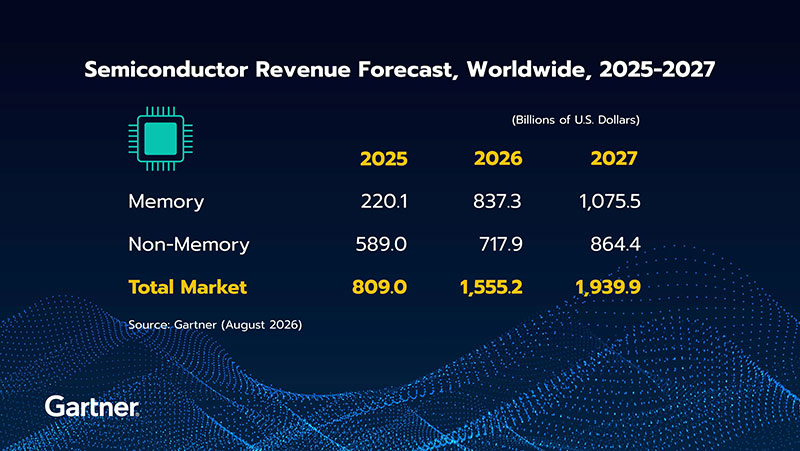
ที่มา: การ์ทเนอร์ (สิงหาคม 2569)
ปีนี้ คาดว่ารายได้ชิป DRAM จะพุ่งขึ้นถึง 246.6% ขณะที่หน่วยความจำ NAND flash จะเติบโตสูงถึง 371.9% แม้ในปีหน้า (2570) จะมีกำลังการผลิตใหม่เข้ามาสู่ตลาดเพิ่มขึ้น แต่สภาวะอุปสงค์และอุปทานจะยังคงตึงตัว เนื่องจากการใช้งานโครงสร้างพื้นฐาน AI ยังคงเพิ่มปริมาณการใช้ชิปหน่วยความจำอย่างต่อเนื่อง
คุณชริช พานต์ (Shrish Pant) ผู้อำนวยการฝ่ายวิเคราะห์การ์ทเนอร์อีกท่าน กล่าวเสริมว่า “โครงสร้างพื้นฐาน AI ได้เข้ามาเปลี่ยนแปลงความไดนามิกของตลาดชิป Memory ไปอย่างสิ้นเชิง แม้การปรับตัวขึ้นของราคาชิปจะเป็นปัจจัยเร่งการเติบโตในปีนี้ แต่การลงทุนสร้างโครงสร้างพื้นฐาน AI การเพิ่มปริมาณความจุหน่วยความจำต่อ AI Server รวมถึงความต้องการชิป High-Bandwidth Memory (HBM) ที่แข็งแกร่งต่อเนื่อง จะเป็นแรงหนุนสำคัญให้รายได้กลุ่ม Memory เติบโตอย่างมั่นคงในระยะยาวไปจนถึงปี 2570 และหลังจากนั้น”
โครงสร้างพื้นฐาน AI กระตุ้นตลาด Non-Memory เติบโตร่วมด้วย
เมื่อระบบ AI Clusters มีขนาดใหญ่ขึ้น รวดเร็วขึ้น และบริโภคพลังงานสูงขึ้น จึงจำเป็นต้องมีการลงทุนเพิ่มในส่วนประกอบอื่น ๆ ไม่ว่าจะเป็นชิป CPU, ชิป Networking Silicon, อุปกรณ์จัดการพลังงาน (Power Management), อุปกรณ์อนาล็อก (Analog Devices) และเทคโนโลยีการเชื่อมต่อด้วยแสง (Optical Interconnect)
“AI ขยายโอกาสทางธุรกิจให้กับอุตสาหกรรมเซมิคอนดักเตอร์ ครอบคลุมทุกระดับชั้นของโครงสร้างพื้นฐาน ไม่ได้กระจุกตัวอยู่แค่ชิปประเภทใดประเภทหนึ่งเท่านั้น โดยการ์ทเนอร์คาดการณ์ว่าหากไม่นับรวมกลุ่มชิป Memory รายได้ชิปกลุ่ม Non-memory จะเติบโตจาก 589 พันล้านดอลลาร์สหรัฐฯ ในปี 2568 ขึ้นไปเป็น 718 พันล้านดอลลาร์สหรัฐฯ ในปีนี้ เติบโต 21.9% และพุ่งแตะ 864 พันล้านดอลลาร์ในปี 2570” คุณเบน ลี กล่าวปิดท้าย