Gartner, Inc., a business and technology insights company, has identified the top technology trends in government for 2027. The trends reflect growing pressure on public sector leaders to modernize operations, strengthen cyber resilience, govern AI at scale and meet rising citizen expectations amid economic and geopolitical uncertainty.
Dean Lacheca, VP Analyst at Gartner, said, “Government CIOs are operating in one of the most disruptive periods in recent memory. AI is reshaping how governments deliver services; cyber threats are evolving faster than traditional defenses can respond; and agencies are under increasing pressure to achieve more with finite resources. The challenge is no longer identifying technology opportunities, but building organizations that can adapt quickly enough to capitalize on them.”
Government technology leaders should assess how the following trends will influence investments, operating models and service delivery strategies in 2026 and beyond (see Figure 1).
Figure 1: Gartner Top Technology Trends in Government
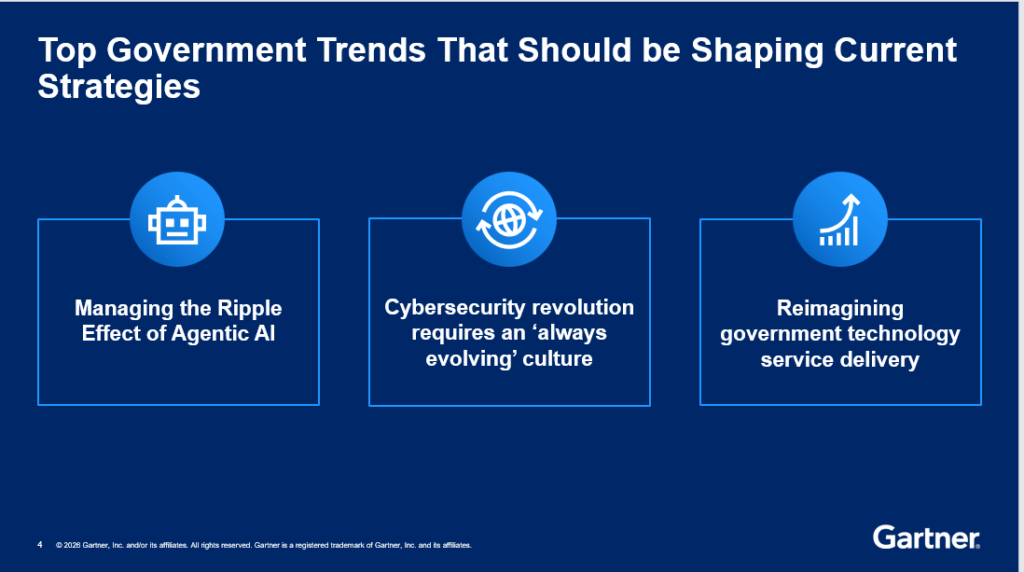
Source: Gartner (September 2026)
Trend 1: Managing the Ripple Effect of Agentic AI
As governments move beyond AI experimentation toward enterprise-scale adoption, AI agents are emerging as a key catalyst for transformation. Agentic AI will increasingly support government operations, enhance citizen experiences, accelerate software development and automate routine decision-making processes.
“The conversation around AI must shift from technology implementation to organizational transformation,” said Lacheca. “Success with agentic AI will depend on modern governance, workforce readiness and the ability to redesign business processes, while creating an adaptable foundation for future innovation.”
Gartner research indicates that many governments are already exploring governance frameworks, digital identities and operational models to support the growing use of AI agents. They must also establish outcome-based AI roadmaps and develop clear metrics to measure value from AI investments.
Trend 2: Cybersecurity Requires an ‘Always Evolving’ Culture
Advances in AI, increasing geopolitical tensions and the emergence of quantum computing are fundamentally changing the cybersecurity landscape. Government organizations must move beyond periodic reviews and compliance-driven approaches toward adaptive, continuously evolving cyber strategies.
“Cybersecurity can no longer be treated as a static function,” said Lacheca. “AI is reducing the time between the discovery of vulnerabilities and their exploitation, while quantum computing is forcing governments to rethink how they protect sensitive information. Resilience, automation and crypto agility must become core components of every cybersecurity strategy.”
Gartner recommends government organizations automate security operations where possible; improve digital supply chain visibility; establish post-quantum cryptography readiness plans; and strengthen governance around data sovereignty and third-party risk.
Trend 3: Reimagining Government Technology Service Delivery
Emerging technologies, increasingly digitally literate workforces and demand for new technical skills and capabilities are forcing governments to rethink how technology services are delivered. Future-ready organizations will be built around digital and AI-literate workforces. This means technology service delivery will require adaptive operating models and governance structures that enable technology innovation across the organization while maintaining accountability.
“Technology will only ever be a tool or a trigger; transformation is ultimately about people,” said Lacheca. “Government IT areas that maintain their relevance will be the ones that invest in workforce capabilities, redesign how work gets done and build a technology operating model that can evolve as quickly as technology itself.”
According to a Gartner survey of 1,219 CIOs and IT leaders conducted in January 2026, 78% of government respondents anticipate investing in their people to advance their key technology initiatives. Gartner recommends they focus on prioritizing AI literacy, workforce modernization and organizational flexibility to meet growing service demands, while improving operational efficiency.
การ์ทเนอร์ อิงก์ บริษัทให้คำปรึกษาและวิจัยด้านธุรกิจและเทคโนโลยี เผยเทรนด์เทคโนโลยีสำคัญสำหรับหน่วยงานภาครัฐในปี พ.ศ. 2570 ที่กำลังจะมาถึง โดยเทรนด์เหล่านี้สะท้อนถึงแรงกดดันของผู้นำภาครัฐที่เพิ่มขึ้นในการต้องมุ่งปรับปรุงการดำเนินงานให้มีความทันสมัย พร้อมเสริมสร้างความแข็งแกร่งด้านความมั่นคงทางไซเบอร์ รวมถึงการกำกับดูแลการใช้ AI ในระดับองค์กร พร้อมตอบสนองต่อความคาดหวังของประชาชนที่สูงขึ้น ท่ามกลางความไม่แน่นอนทางเศรษฐกิจและภูมิรัฐศาสตร์
ดีน ลาเชก้า (Dean Lacheca) รองประธานนักวิเคราะห์การ์ทเนอร์ กล่าวว่า “ผู้บริหาร CIO ของหน่วยงานภาครัฐกำลังบริหารงานภายใต้สภาวะดิสรัปชันที่รุนแรงที่สุดเท่าที่เคยมีมา โดยมีเทคโนโลยี AI ได้เข้ามาปฏิรูปรูปแบบการส่งมอบบริการ ขณะที่ภัยคุกคามไซเบอร์ยกระดับความซับซ้อนจนระบบป้องกันเดิมไม่สามารถรับมือได้ทัน ในขณะเดียวกันหน่วยงานต่าง ๆ เองก็กำลังเผชิญแรงกดดันถาโถมเพื่อที่จะบรรลุผลลัพธ์ให้มากขึ้นด้วยทรัพยากรที่มีอยู่จำกัด สะท้อนให้เห็นความท้าทาย ณ ปัจจุบันที่ไม่ใช่เพียงแค่การมองหาโอกาสในเทคโนโลยีอีกต่อไป แต่เป็นการสร้างองค์กรที่ต้องสามารถปรับตัวได้รวดเร็วพอที่จะฉกฉวยโอกาสจากเทคโนโลยีเหล่านั้น“
ผู้บริหารเทคโนโลยีของหน่วยงานภาครัฐควรร่วมกันประเมินว่า เทรนด์ดังต่อไปนี้จะส่งผลกระทบต่อการลงทุน การพัฒนาโมเดลการดำเนินงาน และวางกลยุทธ์การส่งมอบบริการอย่างไรในปีนี้และอนาคตข้างหน้า (ดูรูปที่ 1)
3 เทรนด์เทคโนโลยีขับเคลื่อนกลยุทธ์หน่วยงานภาครัฐ
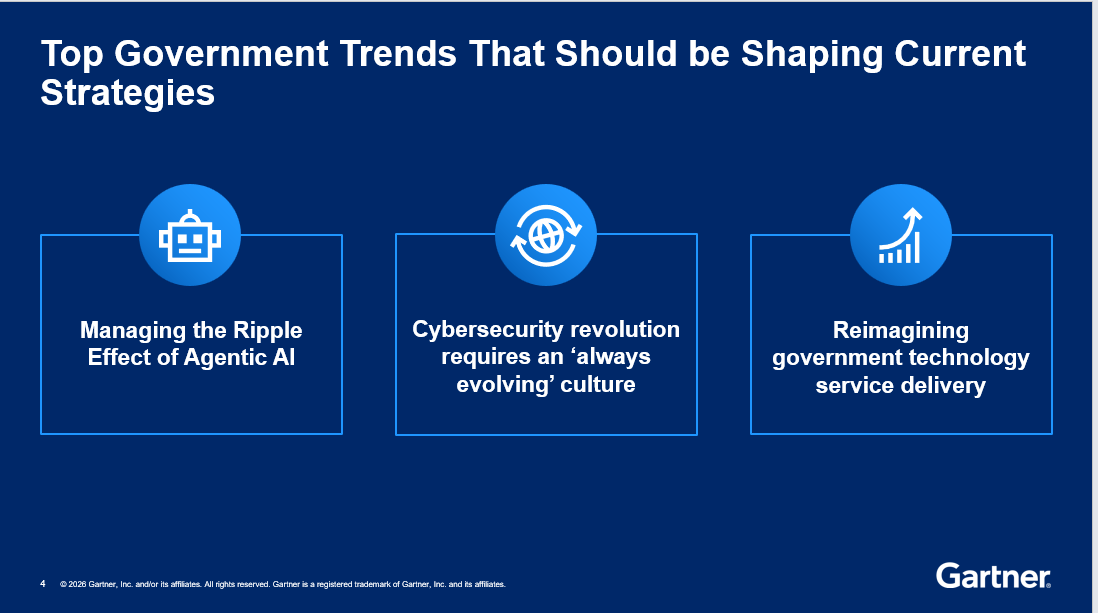
ที่มา: การ์ทเนอร์ (กันยายน 2026)
เทรนด์ที่ 1: การบริหารและจัดการผลกระทบวงกว้างที่เกิดจาก Agentic AI (Managing the Ripple Effect of Agentic AI)
ขณะที่ภาครัฐกำลังก้าวข้ามผ่านช่วงทดลองใช้ AI ไปสู่การปรับใช้ในระดับองค์กร AI agents จึงกลายเป็นตัวเร่งปฏิกิริยาสำคัญในการทรานส์ฟอร์มองค์กร โดย Agentic AI จะเข้ามาสนับสนุนการปฏิบัติงานของภาครัฐ ยกระดับประสบการณ์ประชาชน เร่งความเร็วการพัฒนาซอฟต์แวร์ และช่วยกระบวนการตัดสินใจในงานประจำให้เป็นอัตโนมัติ
“การหารือเรื่อง AI ต้องก้าวข้ามประเด็นที่ถูกมองเป็นเพียงการติดตั้งระบบไปสู่การปรับโครงสร้างองค์กร ซึ่งความสำเร็จของการใช้ Agentic AI จะขึ้นอยู่กับการกำกับดูแลที่ทันสมัย ความพร้อมด้านกำลังคน และความสามารถในการออกแบบกระบวนการทำงานใหม่ ๆ ขณะเดียวกันก็ต้องวางรากฐานที่ยืดหยุ่นและปรับเปลี่ยนได้เพื่อพัฒนานวัตกรรมในอนาคต” Lacheca กล่าว
งานวิจัยการ์ทเนอร์ ยังระบุว่า หน่วยงานภาครัฐหลายแห่งเริ่มวางโครงสร้างการกำกับดูแล การระบุอัตลักษณ์ดิจิทัล และการสร้างโมเดลการทำงานเพื่อรองรับ AI agents ที่เพิ่มขึ้น นอกจากนี้ ภาครัฐยังต้องจัดทำแผนงาน AI ที่มุ่งเน้นผลลัพธ์ พร้อมกำหนดตัวชี้วัดให้ชัดเจนเพื่อวัดผลจากการลงทุนใน AI
เทรนด์ที่ 2: ความมั่นคงไซเบอร์ต้องพึ่ง Culture ที่มีวิวัฒนาการอย่างไม่หยุดยั้ง (Cybersecurity Requires an ‘Always Evolving’ Culture)
ความก้าวหน้าของ AI ความตึงเครียดทางภูมิรัฐศาสตร์ที่เพิ่มขึ้น และการมาถึงของ Quantum Computing นั้นกำลังเปลี่ยนแปลงภูมิทัศน์ความมั่นคงทางไซเบอร์ไปอย่างสิ้นเชิง หน่วยงานรัฐต้องก้าวข้ามการตรวจรับตามรอบหรือทำเพียงเพื่อผ่านเกณฑ์ (Compliance-driven) ไปสู่การขับเคลื่อนกลยุทธ์ไซเบอร์เชิงรุกที่ยืดหยุ่นและปรับเปลี่ยนได้ตลอดเวลา
“เราไม่อาจมอง Cybersecurity เป็นเพียงฟังก์ชันที่อยู่นิ่งได้อีกแล้ว เพราะวันนี้ AI กำลังบีบช่องว่างระหว่างการเจอช่องโหว่จนถึงการถูกแฮ็กให้สั้นลง ขณะที่เทคโนโลยีควอนตัมก็เข้ามาเขย่ามาตรฐานการปกป้องข้อมูลที่ละเอียดอ่อน ภาครัฐต้องยกระดับการปกป้องข้อมูลเชิงยุทธศาสตร์ใหม่ทั้งหมด ผ่าน 3 ปัจจัย ได้แก่ ความยืดหยุ่น (Resilience) ระบบอัตโนมัติ (Automation) และความคล่องตัวในการปรับเปลี่ยนการเข้ารหัส (Crypto agility) ซึ่งจะต้องกลายเป็นองค์ประกอบหลักของทุกกลยุทธ์ความมั่นคงทางไซเบอร์” Lacheca กล่าว
การ์ทเนอร์แนะนำให้ภาครัฐปรับแนวทางการปฏิบัติงานด้านความปลอดภัยให้เป็นระบบอัตโนมัติในจุดที่ทำได้ โดยเพิ่มทัศนวิสัยและการมองเห็นในห่วงโซ่อุปทานดิจิทัล จัดทำแผนความพร้อมด้านวิทยาการการเข้ารหัสผ่านยุคหลังควอนตัม (Post-Quantum Cryptography) และยกระดับการกำกับดูแลเรื่องอธิปไตยข้อมูล (Data Sovereignty) รวมถึงความเสี่ยงที่มาจากบุคคลที่สาม
เทรนด์ที่ 3: รีเซ็ตกลยุทธ์การให้บริการเทคโนโลยีภาครัฐรองรับอนาคต (Reimagining Government Technology Service Delivery)
เทคโนโลยีขั้นสูง ควบคู่กับกำลังคนที่มีความเข้าใจด้านดิจิทัลและความต้องการทักษะใหม่ ๆ กำลังบีบให้ภาครัฐต้องคิดใหม่ทำใหม่เกี่ยวกับวิธีการมอบบริการด้านเทคโนโลยี องค์กรแห่งอนาคตจะขับเคลื่อนด้วยบุคลากรที่มีความเชี่ยวชาญด้านดิจิทัลและ AI ส่งผลให้การส่งมอบบริการต้องพึ่งพาโมเดลการดำเนินงานและโครงสร้างการกำกับดูแลที่ยืดหยุ่น เปิดรับนวัตกรรมได้ทั่วทั้งองค์กร โดยยังคงไว้ซึ่งความโปร่งใสและตรวจสอบได้
“เทคโนโลยีเป็นเพียงแค่เครื่องมือหรือตัวจุดประกายเท่านั้น แต่การทรานส์ฟอร์มที่แท้จริงนั้นขึ้นอยู่กับคน โดยหน่วยงานไอทีภาครัฐที่ยังรักษาความได้เปรียบไว้ได้ คือหน่วยงานที่ลงทุนในศักยภาพบุคลากร มีการออกแบบกระบวนการทำงานใหม่ และสร้างรูปแบบการดำเนินงานด้านเทคโนโลยีที่สามารถปรับเปลี่ยนและพัฒนาได้รวดเร็วทัดเทียมกับตัวเทคโนโลยีเอง” Lacheca กล่าว
จากผลสำรวจของการ์ทเนอร์ต่อผู้บริหาร CIO และผู้นำ IT ในองค์กรภาครัฐ จำนวน 1,219 คน เมื่อเดือนมกราคม 2569 พบว่า 78% ของผู้ตอบแบบสอบถามมีแผนลงทุนพัฒนาบุคลากรของตนเพื่อขับเคลื่อนโครงการด้านเทคโนโลยีสำคัญ โดยการ์ทเนอร์แนะนำให้เน้นการจัดลำดับความสำคัญของความเข้าใจด้าน AI การปรับกำลังคนให้ทันสมัย และเพิ่มความคล่องตัวขององค์กร เพื่อตอบสนองความต้องการด้านบริการที่เพิ่มขึ้น ควบคู่ไปกับการยกระดับประสิทธิภาพการดำเนินงาน