
Gartner

Gartner Predicts by 2028, 50% Of Organizations Will Adopt Zero-Trust Data Governance as Unverified AI-Generated

การ์ทเนอร์คาดภายในปี 2571 องค์กรครึ่งหนึ่ง (50%) จะใช้มาตรการ Zero-Trust Data Governance รับมือการเพิ่มขึ้นของข้อมูล AI ที่ไม่ถูกตรวจสอบ

Increasing Volume of AI-Generated Data Threatens Future Large Language Model Reliability

By 2028, 50% of organizations will implement a zero-trust posture for data governance due to the proliferation of unverified AI-generated data, according to Gartner, Inc., a business and technology insights company.

“Organizations can no longer implicitly trust data or assume it was human generated,” said Wan Fui Chan, Managing VP at Gartner. “As AI-generated data becomes pervasive and indistinguishable from human-created data, a zero-trust posture establishing authentication and verification measures, is essential to safeguard business and financial outcomes.”

AI-Generated Data Heightens Model Collapse Risks and Compliance Demands

Large language models (LLMs) are typically trained on “web-scraped” data and a variety of sources, including books, code repositories and research papers. Some of these sources already contain AI-generated content, and if current trends continue, nearly all will eventually be populated with AI-generated data.

According to the 2026 Gartner CIO and Technology Executive Survey, 84% of respondents expect their enterprise to increase funding for GenAI in 2026. As organizations accelerate both adoption and investment in AI initiatives, the volume of AI-generated data will continue to rise. This means future generations of LLMs will increasingly be trained on outputs from previous models, heightening the risk of “model collapse,” where AI tools’ responses may no longer accurately reflect reality.

“As AI-generated content becomes more prevalent, regulatory requirements for verifying ‘AI-free’ data are expected to intensify in certain regions,” said Chan. “However, these requirements may differ significantly across geographies, with some jurisdictions seeking to enforce stricter controls on AI-generated content, while others may adopt a more flexible approach.

“In this evolving regulatory environment, all organizations will need the ability to identify and tag AI-generated data. Success will depend on having the right tools and a workforce skilled in information and knowledge management, as well as metadata management solutions that are essential for data cataloging.”

Active metadata management practices will become a key differentiator, enabling organizations to analyze, alert and automate decision making across their data assets.

Managing Risks Associated with Rising Unverified AI-Generated Data

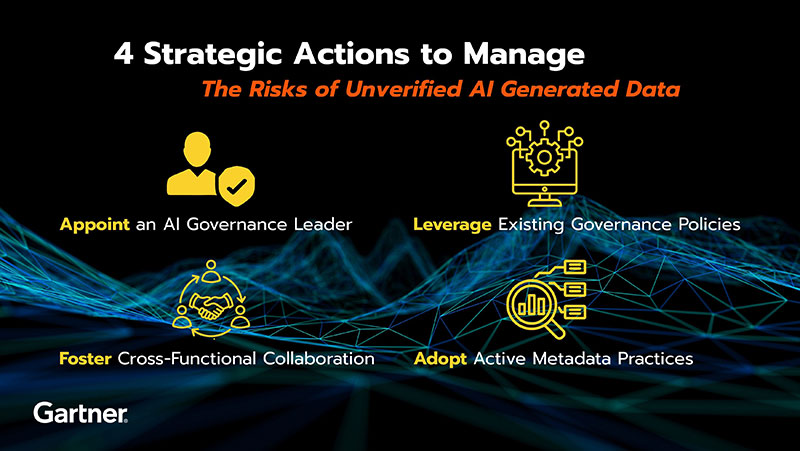
Organizations should consider several strategic actions to manage the risks of unverified data:
Gartner Predicts by 2028, 50% Of Organizations Will Adopt Zero-Trust Data Governance as Unverified AI-Generated

  • Appoint an AI Governance Leader: Establish a dedicated role responsible for AI governance, including zero-trust policies, AI risk management and compliance operations. This leader should work closely with data and analytics (D&A) teams to ensure both AI-ready data and systems capable of handling AI-generated content.
  • Foster Cross-Functional Collaboration: Form cross-functional teams that include cybersecurity, D&A and other relevant stakeholders to conduct comprehensive data risk assessments to identify business risks related to AI-generated data and determine which are addressed by existing data security policies and which need new strategies.
  • Leverage Existing Governance Policies: Build on current D&A governance frameworks and focus on updating security, metadata management and ethics related policies to address new risks from AI-generated data.
  • Adopt Active Metadata Practices: This enables real-time alerts when data is stale or requires recertification, helping organizations quickly identify when business-critical systems may become exposed to inaccurate or biased data.
ซึ่งการเพิ่มขึ้นของข้อมูลที่สร้างโดย AI กำลังเป็นภัยคุกคามต่อความน่าเชื่อถือของการพัฒนาโมเดลภาษาขนาดใหญ่ (LLM)

การ์ทเนอร์ อิงก์ บริษัทวิจัยและให้คำปรึกษาชั้นนำด้านธุรกิจและเทคโนโลยี ระบุว่าภายในปี 2571 ครึ่งหนึ่ง (50%) ขององค์กรจะนำมาตรการ “Zero-Trust” มาใช้เพื่อกำกับดูแลข้อมูล (Data Governance) และรับมือกับการแพร่กระจายของข้อมูลที่สร้างโดย AI (AI-Generated Data) ที่ยังไม่ได้รับการตรวจสอบ

หวัน ฟุ่ย ชาน (Wan Fui Chan) รองประธานบริหารการ์ทเนอร์ กล่าวว่า “องค์กรไม่สามารถเชื่อถือข้อมูลหรือคิดเอาเองว่าข้อมูลนั้นถูกสร้างโดยน้ำมือมนุษย์ได้อีกต่อไป เมื่อข้อมูลที่สร้างโดย AI เผยแพร่กระจายออกไปจนทำให้เราแยกแยะไม่ออกจากข้อมูลที่มนุษย์สร้างขึ้น ดังนั้นการนำมาตรการ Zero-Trust มาใช้ เพื่อสร้างระบบยืนยันตัวตนและตรวจสอบข้อมูล จึงเป็นเรื่องจำเป็นอย่างยิ่งสำหรับปกป้องผลลัพธ์ทางธุรกิจและการเงิน”

ข้อมูล AI เพิ่มความเสี่ยงต่อภาวะการล่มสลายของโมเดล (Model Collapse) และการปฏิบัติตามกฎระเบียบ

โดยปกติแล้ว โมเดลภาษาขนาดใหญ่ (LLMs) จะได้รับการฝึกฝนด้วยข้อมูลที่รวบรวมมาจากเว็บ (Web-Scraped Data) รวมถึงหนังสือ แหล่งรวมโค้ด และงานวิจัย ซึ่งแหล่งข้อมูลเหล่านี้บางส่วนมีเนื้อหาที่ AI สร้างขึ้นปะปนอยู่แล้ว และหากแนวโน้มนี้ยังดำเนินต่อไป ในที่สุดแหล่งข้อมูลเกือบทั้งหมดก็จะเต็มไปด้วยข้อมูลที่ AI สร้างขึ้นมา

จากผลสำรวจ 2026 Gartner CIO and Technology Executive Survey พบว่า 84% ของผู้ตอบแบบสอบถามคาดว่าในปี 2569 องค์กรของตนจะเพิ่มงบประมาณด้าน GenAI ซึ่งหมายความว่าโมเดล LLM รุ่นต่อ ๆ ไปจะได้รับการฝึกด้วย “ผลลัพธ์จากโมเดลรุ่นก่อนหน้า” มากขึ้นเรื่อย ๆ ทำให้เกิดความเสี่ยงต่อภาวะการล่มสลายของโมเดล (Model Collapse) หรือการที่ AI ให้คำตอบบิดเบือนไปจากความเป็นจริง

“เมื่อข้อมูลที่สร้างจาก AI แพร่หลายมากขึ้นทำให้บางประเทศในบางภูมิภาคเข้มงวดกับกฎระเบียบมากขึ้นเพื่อบังคับให้ต้องมีการตรวจสอบข้อมูลว่า “ปลอด AI” (AI-Free) อย่างไรก็ตาม บางประเทศอาจพยายามบังคับใช้การควบคุมที่เข้มงวดกว่าสำหรับเนื้อหา AI ขณะที่บางแห่งอาจใช้วิธีการที่ยืดหยุ่นกว่า” ชานกล่าวเสริม

“ในสภาพแวดล้อมด้านกฎระเบียบที่เปลี่ยนไปนี้ องค์กรต้องมีเครื่องมือสำหรับระบุและติดตามข้อมูลที่สร้างจาก AI โดยจะสำเร็จหรือไม่นั้นขึ้นอยู่กับการมีเครื่องมือที่เหมาะสมและมีบุคลากรที่มีทักษะในการจัดการข้อมูลและองค์ความรู้ รวมถึงมีโซลูชันการจัดการเมตาดาต้า (Metadata) หรือข้อมูลที่ใช้อธิบายชุดข้อมูล ซึ่งจำเป็นอย่างยิ่งต่อการคัดแยกประเภทข้อมูล”

แนวทางปฏิบัติด้านการจัดการเมตาดาต้าเชิงรุก (Active Metadata Management) จะกลายเป็นปัจจัยสำคัญที่สร้างความต่าง ช่วยให้องค์กรสามารถวิเคราะห์ แจ้งเตือน และตัดสินใจเกี่ยวกับสินทรัพย์ข้อมูลได้แบบอัตโนมัติ

วิธีจัดการความเสี่ยงเพื่อรับมือกับข้อมูล AI ที่ไม่ได้รับการตรวจสอบและทวีปริมาณมากขึ้น 

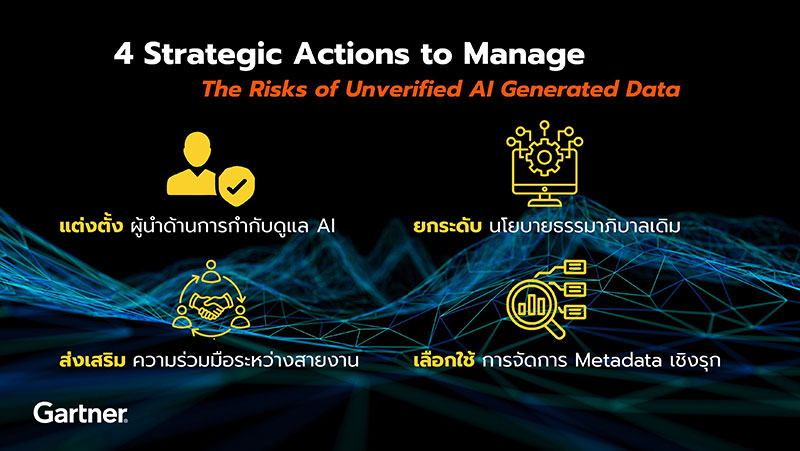
การ์ทเนอร์แนะนำองค์กรธุรกิจควรปรับใช้กลยุทธ์ ดังนี้:

Gartner Predicts by 2028, 50% Of Organizations Will Adopt Zero-Trust Data Governance as Unverified AI-Generated

  • แต่งตั้งผู้นำด้านการกำกับดูแล AI หรือ AI Governance Leader: กำหนดบทบาทหน้าที่อย่างชัดเจนเพื่อดูแลนโยบาย Zero-Trust, การจัดการความเสี่ยงจาก AI และการปฏิบัติตามกฎระเบียบ โดยทำงานร่วมกับทีมข้อมูลและการวิเคราะห์ (D&A) เพื่อให้มั่นใจได้ว่าทั้งข้อมูลและระบบมีความพร้อมสำหรับ AI และสามารถจัดการกับเนื้อหาที่สร้างโดย AI ได้
  • ส่งเสริมความร่วมมือข้ามสายงาน: สร้างทีมที่ทำงานสอดประสาน ประกอบด้วยฝ่ายความมั่นคงปลอดภัยไซเบอร์ (Cybersecurity) และฝ่ายข้อมูลและการวิเคราะห์ (D&A) รวมถึงผู้เกี่ยวข้องในฝ่ายอื่น ๆ เพื่อประเมินความเสี่ยงว่าข้อมูลที่ AI สร้างขึ้นกระทบต่อธุรกิจอย่างไรบ้าง และนโยบายเดิมที่ใช้อยู่เพียงพอหรือจำเป็นต้องมองหากลยุทธ์ใหม่ขึ้นมาทดแทน
  • นำนโยบายธรรมาภิบาลเดิมที่มีอยู่มาปรับใช้: ต่อยอดจากกรอบการทำงานเดิม โดยปรับปรุงเรื่องความปลอดภัย การจัดการข้อมูลที่ใช้อธิบายข้อมูล (Metadata) และนโยบายด้านจริยธรรมให้ครอบคลุมความเสี่ยงใหม่ ๆ ที่เกิดจากข้อมูลที่สร้างโดย AI
  • นำการจัดการ Metadata เชิงรุก หรือ Active Metadata Practices มาใช้: เพื่อให้มีระบบแจ้งเตือนแบบ Real-time เมื่อข้อมูลล้าสมัยหรือต้องมีการตรวจสอบซ้ำ ช่วยให้องค์กรไหวตัวทันเมื่อระบบสำคัญกำลังเผชิญหน้ากับข้อมูลที่ไม่ถูกต้องหรือมีอคติ